Reforestation

Restoring the last fragment of tropical rainforest in Kenya

Restoring the last fragment of tropical rainforest in Kenya

Why support rainforest restoration in Kenya?

While the vast majority of the blame for climate change can be attributed to our over-reliance on fossil fuels, massive deforestation in  the 20th and 21st centuries has diminished one of our planet’s best tools for absorbing carbon. Our forests are natural buffers against some of the worst effects of climate change, buffers that can be preserved through action on the ground.

Forests are vital for wildlife and for freshwater resources, and are relied on for the livelihoods of the  majority of local communities in Kakamega. Local people are estimated to derive products worth 100 million Kenya  Shillings (approximately US$ 1.7 million) from the Kakamega tropical rainforest each year. Local people recognise  that the forests need to be protected – but they also contribute to the damage, due to a lack of alternative livelihoods.  

In the past, Kenya has experienced erratic rainfall, attributed mainly to depletion of the five major water towers and its only remnant of tropical rainforest ecosystem – Kakamega forest. This has led to poor yields for farmers, escalating food prices and debilitating droughts.

The need to restore the degraded areas of the water tower is critical to millions of people who depend on the Kakamega tropical rainforest. 

So far, this project has:

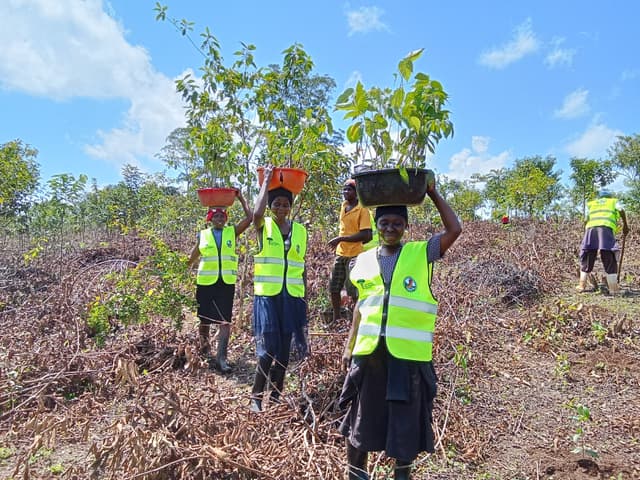
  • Planted over 660,000 native and threatened trees 

  • Restored over 500 hectares of critically-degraded and biodiversity rich habitats in Kakamega Tropical rainforest  

  • Sustainably diversified and strengthened livelihoods within forest buffers for over 15,000 people through tree planting activities and the promotion of alternative and profitable uses of the forest

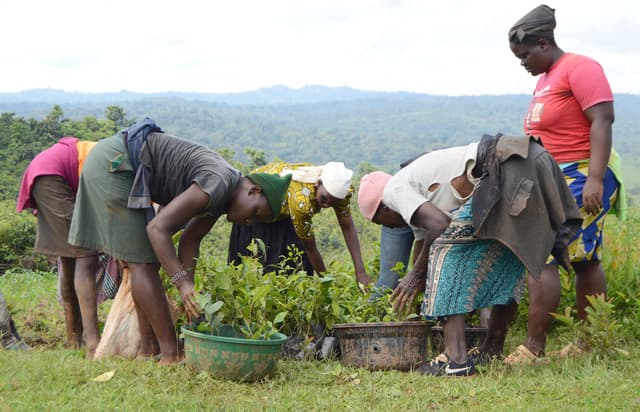
  • Produced indigenous and threatened tree seedlings in community-managed nurseries selected close to the identified planting sites  

  • Enabled Local Community Forest Associations (CFAs) to take leadership in forest management and  protection

  • Held advocacy workshops to rally public participation in forest and riparian protection

Locations

Kakamega County, Kenya

Timeline

Follow the latest milestones and updates from this project.

Sep 2025

A new phase in the Kakamega Rainforest program

As of the 27th August 2025 Phase 4 of the project has been proposed. Phase 4 of this project will run from August 2025 to July 2027, with the ITF planning to replant 106,383 trees that will restore 70 hectares of degraded sites within the Kakamega Rainforest, the Nandi Forest, and the Koibem block, as well as an additional 20 hectares within forest buffer zones in Nandi County. The location is adjacent to the project’s Phase 3 site at Chepkumia block, enabling seamless continuation and expansion of restoration efforts.

Mar 2024
Kakamega update 3

Kakamega update 3

Phase 3 off this project began, planting an additional 230,000 trees in 2 new sites within the Esecheno and Nandi forest blocks.

Apr 2023
Kakamega update 2

Kakamega update 2

The second phase of the project began, with a plan to plant a further 331,440 trees across 4 sites covering 318.4 hectares. 30,000 of these trees were part of an agroforestry programme.

Mar 2023

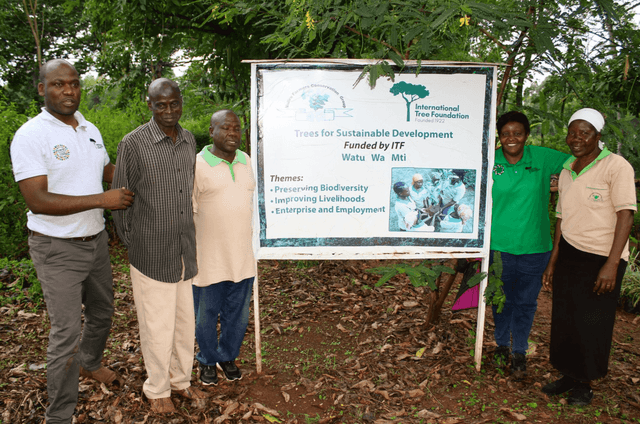
Women benefiting from project they’re leading in the Kakamega rainforest

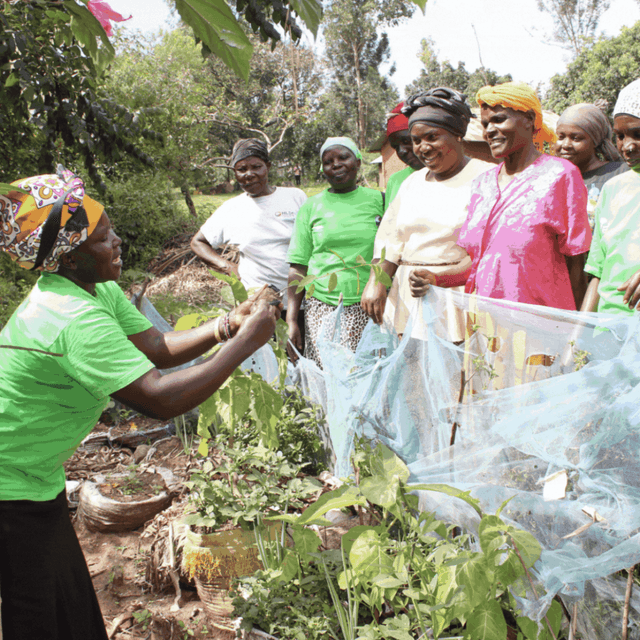
As part of this project, women are establishing their own tree nurseries to diversify their income sources. Just 6 months into this project, women are reporting that they can now put food on the table, and are being respected by their husbands.

Nov 2022
Kakamega update 1

Kakamega update 1

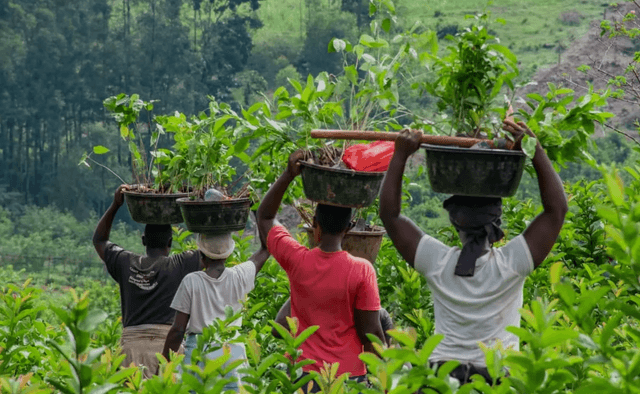
The first phase of this project begins! Working with a local organisation called Women in Water and Natural Resource Conservation, and the Kenya Forest Service, nurseries were established to grow 100,000 trees.

Benefits

Planting a total of 100,000 native and threatened trees will help to restore the Kakamega tropical rainforest and the climate in Kenya.

Sustainable development goals

These Sustainable Development Goals show the wider outcomes this project supports beyond its headline impact.

No Poverty

Working on sustainably diversifying and strengthening livelihoods within forest buffers for 600 households through tree planting activities and the promotion of alternative and profitable uses of the forest aligns with this SDG aimed at ending poverty.

Gender Equality

By working with Women in Water and Natural Resource Conservation, the project is empowering women and girls, pushing for gender equality.

Clean Water and Sanitation

The majority of local communities in Kakamega rely upon the Kakamega tropical rainforest for freshwater, restoration of this forest and through working with Women in Water and Natural Resource Conservation aligns with this SDG.

Climate Action

Restoring the last fragment of tropical rainforest in Kenya aims to take urgent action to combat climate change and its impacts.

Life on Land

The project aims to plant a total of 100,000 native and threatened trees and restore 100 Hectares of critically-degraded and biodiversity rich habitat, aligns with SDG 15 to sustainably manage forests and halt biodiversity loss.

Verification

These partners help deliver the project and verify its impact.

Supplier

International Tree Foundation

International Tree Foundation

International Tree Foundation is a charity working with local communities to plant trees and restore forests in places where, together, we can make the fastest, most lasting impact for communities and the future of our planet.