Carbon avoidance

Efficient and Clean Cooking for households in Kenya

Efficient and Clean Cooking for households in Kenya

Why support this project?

Using traditional stoves that use fuels like charcoal and firewood is a significant health crisis. Burning firewood and charcoal indoors releases pollutants linked to pneumonia, stroke, ischemic heart disease, chronic obstructive pulmonary disease, and lung cancer.

High biomass consumption also drives deforestation, land degradation, and greenhouse gas emissions, while stripping soils of fertility and their ability to hold water.

Use of these stoves is also a time and opportunity cost, disproportionately carried by women and girls. Typically, mothers can spend hours travelling to collect wood fuel; in some communities, this responsibility can fall to daughters who are also tasked with collecting firewood, a responsibility which can keep them from attending school.

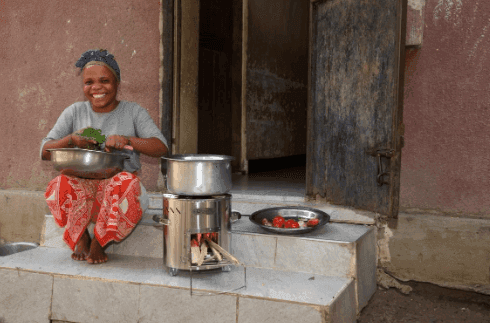
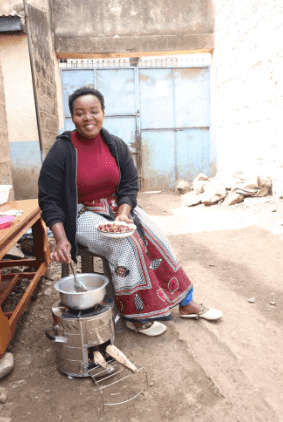
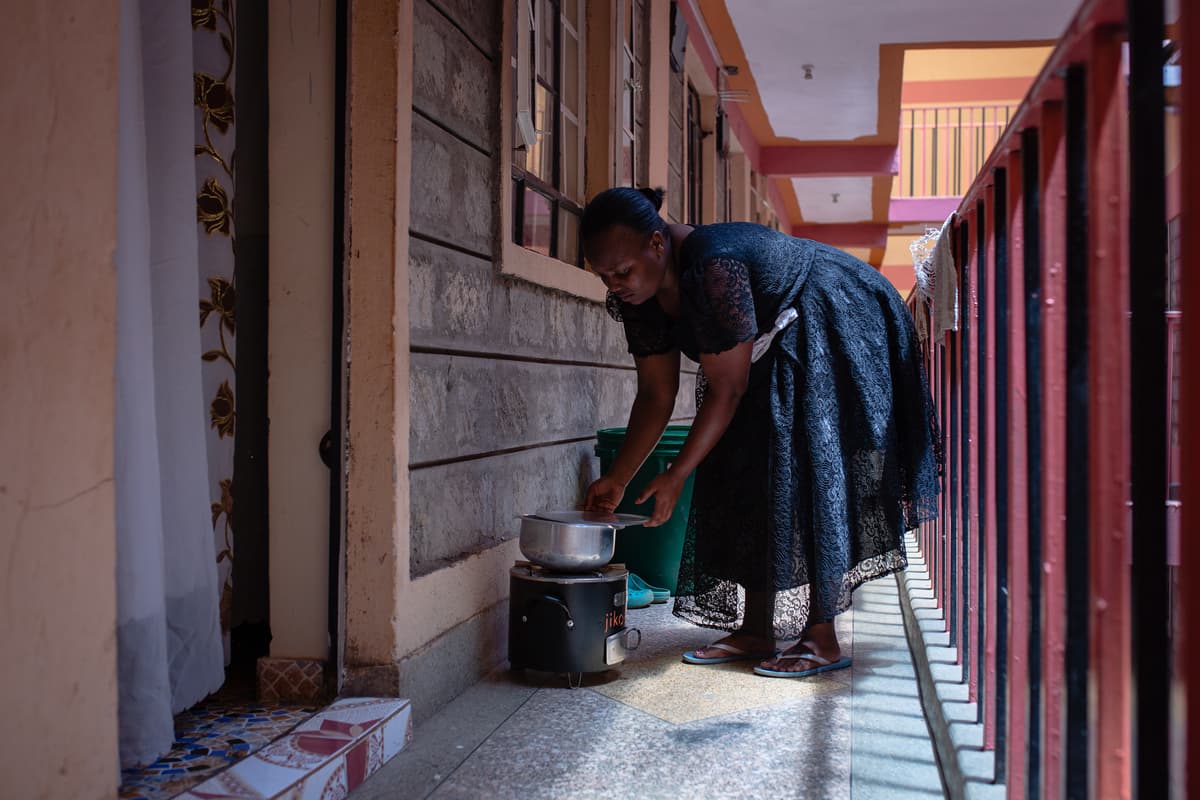
This project targets rural households relying on highly inefficient traditional three-stone fires and open cookstoves and focuses on distributing efficient, improved stoves, which are a significant transformation, enabling a more sustainable, economic and healthier way to cook. 

This project is one of the first cookstove projects globally to issue CCP (Core Carbon Principles) credits. CCP is the ICVCM's integrity label, and Gold Standard's clean cooking methodologies (TPDDTEC v4 and the biogas thermal energy methodology) were confirmed CCP-eligible.

What are community projects?

Community projects bring climate action into everyday life, through changes such as more efficient cooking and better access to clean water. Using less fuel helps reduce emissions and pressure on surrounding forests. Depending on the project, it can also mean cleaner air at home and less time spent collecting firewood.

Project summary

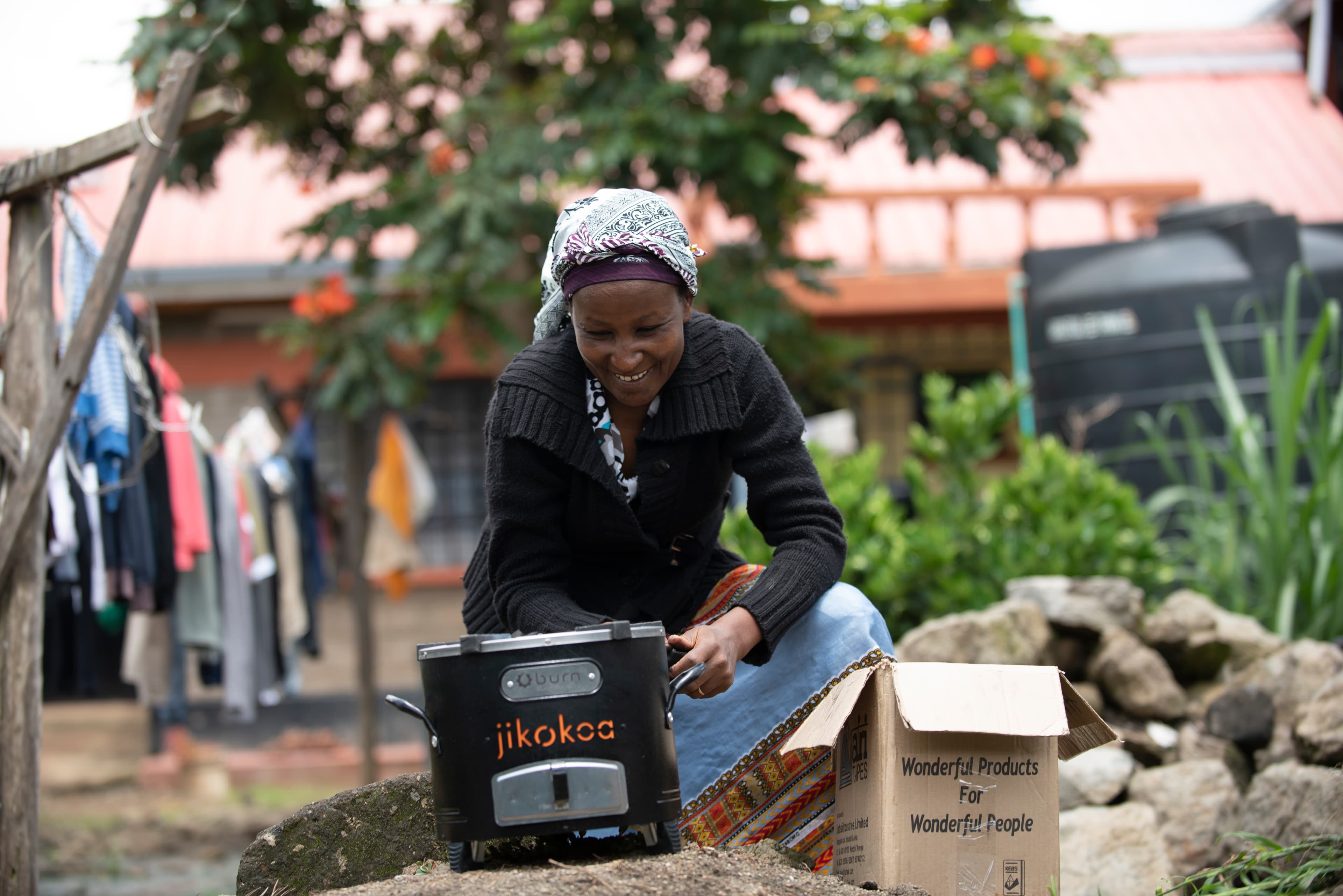
The Global Cookstoves Kenya clean cooking project deploys highly efficient improved firewood cookstoves, known as the Kuniokoa, to rural households across the Republic of Kenya. It is implemented by Global Cookstoves, a JV between Key Carbon and BURN Manufacturing Co., the largest manufacturer of highly efficient improved cookstoves in Sub-Saharan Africa and operator of the first and only modern cookstove manufacturing facility in Kenya.

Locations

Kenya

Benefits

Climate

The Kuniokoa stove achieves a thermal efficiency of 51%, dramatically reducing firewood consumption per household, using 71% less wood. By displacing non-renewable woody biomass combustion in inefficient open fires, the project generates verified emission reductions against a conservative set of parameters. In its first monitoring period alone, the project achieved 82,660 tCO2e in verified emission reductions. 

The project saved 47,799 tonnes of non-renewable biomass in its first monitoring period, delivering a measurable contribution to halting the deforestation and land degradation driven by fuelwood harvesting. With a crediting period from 2022-2027 and the option to renew beyond, the project delivers sustained, long-term climate impact at scale across Kenya.

Nature

The widespread adoption of highly efficient cookstoves directly reduces pressure on Kenya's forests and woodland ecosystems. The project's fuelwood savings translate into reduced deforestation and land degradation: in the first monitoring period alone, nearly 48,000 tonnes of non-renewable biomass were preserved that would otherwise have been harvested and combusted. This contributes tangibly to halting deforestation in the project's operating areas across 24 Kenyan counties.

The combustion of biomass in inefficient open fires also generates black carbon, fine particulate matter (PM2.5), and carbon monoxide — pollutants that damage both human health and local air quality. By displacing these fires with a significantly cleaner-burning stove technology across more than 100,000 active households, the project contributes to improved air quality at the community level, benefiting both people and the natural environment.

People

The project delivers direct and measurable improvements to the lives of rural Kenyan households, the majority of whom are women who bear the primary burden of cooking and firewood collection. 100% of surveyed households reported improved perceived air quality since adopting the Kuniokoa stove. Households reported average time savings of 35 minutes per day in cooking time and 16 minutes per day in firewood collection, time that can be redirected towards education, income generation, or family life. 62% of surveyed households reported meaningful monetary savings on firewood expenditure compared to their prior baseline.

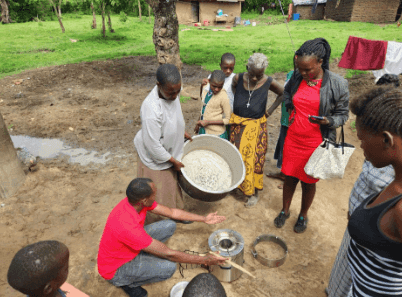
The project has created 195 local jobs and trained 226 people in skills development during its first monitoring period, contributing to livelihoods and capacity in rural Kenya. Carbon revenues are used to subsidise stove costs, making clean cooking technology accessible to households who would otherwise be unable to afford it. The project's end-user engagement programme,  including market activations, household follow-up visits, multilingual warranty booklets, and social media outreach, ensures sustained adoption and correct use across all 24 countries of distribution.

SDGs supported

No Poverty

62% of surveyed households reported monetary savings on firewood expenditure as a result of using the Kuniokoa stove. For rural Kenyan households spending a significant portion of income on fuel, this reduction in cooking costs provides direct economic relief.

Good Health and Well-Being

100% of surveyed households reported improved perceived air quality since adopting the project stove. Displacement of inefficient three-stone fires reduces exposure to indoor air pollutants — including PM2.5 and carbon monoxide — that are known contributors to pneumonia, stroke, chronic obstructive pulmonary disease, and lung cancer.

Quality Education

226 individuals received skills development training during the first monitoring period. BURN's training programme builds local human capital in stove use, distribution, and project monitoring, creating pathways to employment and capability in rural communities.

Gender Equality

Women are the primary cooks in the vast majority of project households and are therefore the primary beneficiaries of the project's time savings. Households reported average savings of 35 minutes per day in cooking time and 16 minutes per day in firewood collection, reducing the unpaid domestic labour burden carried disproportionately by women.

Affordable and Clean Energy

105,532 improved cookstoves were in active use at the end of the first monitoring period, providing affordable, cleaner, and more efficient energy access to rural households. The Kuniokoa's 42.4% thermal efficiency and 7-10 year estimated lifetime make it a durable, cost-effective clean energy solution for households without access to modern fuels.

Decent Work and Economic Growth

The project created 195 local jobs during the first monitoring period, spanning distribution, field monitoring, sales, and customer experience. BURN's in-country operations model prioritises local employment, contributing to sustainable economic activity in rural Kenya.

Climate Action

The project delivered 82,660 tCO2e in verified emission reductions in its first monitoring period.

Life on Land

By reducing non-renewable fuelwood consumption by nearly 48,000 tonnes in the first monitoring period, the project relieves harvesting pressure on Kenya's forests and woodland ecosystems, contributing to halting deforestation and protecting biodiversity across its 24 counties of operation.

Verification

These partners help deliver the project and verify its impact.

Suppliers

Burn
Burn

Over the past 10 years, BURN has built a successful business while proving that cookstoves can have transformative social, financial and environmental impacts.

Verifiers

Gold standard
Gold standard

This project is verified by the Gold Standard.

View evidence
Core Carbon Principles (CCPs)

The Core Carbon Principles (CCPs) are ten fundamental, science-based principles for identifying high-quality carbon credits that create real, verifiable climate impact. Developed with input from hundreds of organisations, they set a global benchmark for high integrity in the voluntary carbon market raising it to a consistent level of quality and ensure it accelerates progress towards the 1.5°C target.