

Carbon removal
Afforestation of degraded grasslands, Colombia
Overview
Site
Benefits
Verification
Context
Trees absorb carbon from the air through photosynthesis, and store the carbon in their woody biomass. Afforestation, reforestation and revegetation (ARR) is a climate solution which involves the planting (or assisting the natural regeneration) of trees and shrubs. It involves three main activities:
- ‘Afforestation’ refers to the planting of trees where there was no recent tree cover.
- ‘Reforestation’ refers to the planting of trees where the was recent tree cover which has been deforested.
- ‘Revegetation’ is an umbrella term which refers to the replanting and rebuilding the soil of degraded land.
All of the 2ºC climate pathways modelled in the most recent IPCC report include some degree of carbon dioxide removal, and around 40% of this is contributed by ARR. It is a well-practised method of carbon dioxide removal which is far less experimental than most novel carbon removal technologies.
Project
Forest First Colombia is committed to sustainable forestry which underpins their overall corporate philosophy. Forest Firsts approach to this is rooted in four key themes: Living. Breathing, Growing, Learning.
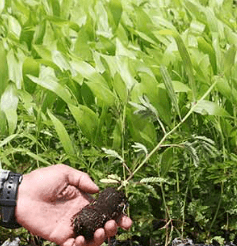
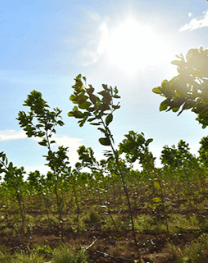
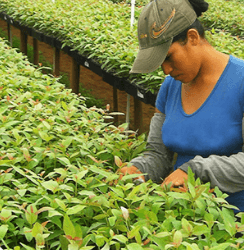
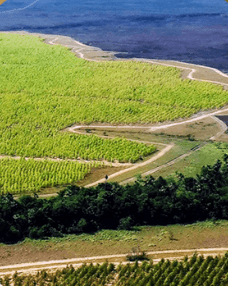
The project’s goal is to restore degraded grasslands in Vichada, Colombia, by establishing timber plantations. This involves afforesting 30,605 hectares of low-fertility grasslands in Puerto Carreño and La Primavera municipalities, with Eucalyptus and Acacia as timber species. Afforestation will enhance ecosystem connectivity and create over 200 full-time jobs, providing equal opportunities for women and men in an economically challenged area. Additionally, the project will increase forest cover, sequestering an average of 139,489 tCO2e annually and contributing to greenhouse gas emissions reduction.
Verification
This project is verified by the Verified Carbon Standard. You can view it on the Verra Registry here.

Climate solution
Tree Plantations on Degraded Land
As of 2018, 294.1 million hectares of land were used for tree plantations on degraded land. Establishing tree plantations on an additional 112–174 million hectares of marginal lands can sequester 22.04–35.09 gigatons of carbon dioxide by 2050. The use of marginal lands for afforestation also indirectly avoids deforestation that otherwise would be done in the conventional system. At an initial cost of US$91.89–141.68 billion and lifetime operational cost of US$157.74-–243.37 billion to implement, this additional area of timber plantations could produce a lifetime net profit of US$2.05–3.17 trillion.
Photos
Locations
Vichada, Colombia
Benefits
Sustainable development goals
These Sustainable Development Goals show the wider outcomes this project supports beyond its headline impact.


Verification
These partners help deliver the project and verify its impact.
Verifier

Verified Carbon Standard
The Verified Carbon Standard (VCS) Program is the world's most widely used greenhouse gas (GHG) crediting program.