
Carbon removal

Producing biochar in Brazil

Producing biochar in Brazil

Why support this project?

In Brazil, low-productivity cattle ranching is a leading driver of deforestation and biodiversity loss. Over 70% of the country's pastureland is degraded, supporting fewer than one animal per hectare.

Biochar has proven effective in restoring these degraded soils. Applied to these pastures, it has boosted Brachiaria grass productivity by 27%, improved macronutrient availability, reduced soil acidity, and locked away carbon, restoring degraded land while working as climate mitigation.

Aperam BioEnergia is also the first company in Brazil authorised to trade Carbon Capture and Storage (CORC) credits on Puro.earth.

What is biochar?

Biochar is a stable, carbon-rich material made by heating plant residues to 350-1000°C with little oxygen. It locks carbon into solid form long-term and boosts soil nutrients and plant productivity.

Project summary

The project

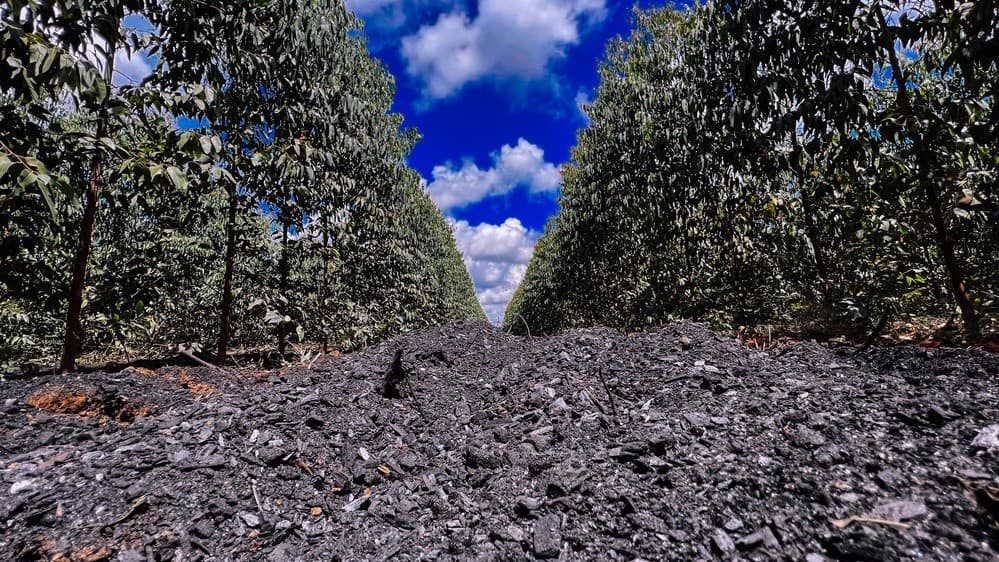
The Aperam BioEnergia biochar project is situated in Capelinha, Brazil. The main objective of the project is the production of charcoal and sustainable forest management. The initiative transforms forest residues into a valuable climate solution. The feedstock is sourced primarily from FSC-certified eucalyptus plantations owned and managed by BIO, supplied as logs for char used in Aperam's steel manufacturing (ASA) process, alongside forestry residues: branches, leaves, and roots. The waste material is transported to one of Aperam's six production units, where it undergoes pyrolysis to produce biochar. The biochar is applied to soil, delivering both durable carbon removal and soil improvement benefits. Aperam BioEnergia currently has capacity to remove approximately 40,000 tonnes of CO₂ annually.

Locations

Brazil

Timeline

Follow the latest milestones and updates from this project.

Apr 2026

Issuance of Audit Statement No. 005

  • Official Verification Statement: EnergyLink Services formally issued Audit Statement No. 005 verifying CO2 removal achieved at the facility
  • Final Removal Certification: Confirmed 46,433.05 eligible CORCs generated from 28,376.19 dry tonnes of biochar (conversion factor of 1.6363 tCO2e per dry tonne biochar)
Mar 2026

Output Verification Audit Report Submission

  • Verified 46,874.18 eligible CORCs for the current period, minus the 441.13 CORC deduction, resulting in 46,433.05 net verified CORCs
Dec 2025

2025 Output Verification Audit Report Submission

  • Verified 39,564.50 eligible CORCs from 26,678.36 dry tonnes of biochar used (conversion factor of 1.4830 tCO2e/tonne dry biochar)
Aug 2024

Physical Site Visit and Continuous Reactor Review

  • Site Verification: EnergyLink Services conducted an on-site physical audit of facility operations
  • Continuous Reactor Recommendation: Recommended implementing on-site testing for organic carbon and hydrogen to prepare for future continuous reactor operations once testing phases conclude
Jun 2024

2024 Output Audit Report Submission

  • Recalculated CORC Quantification: Re-verified total eligible CORCs at 59,357 CORCs from 35,879 dry tonnes of biochar (conversion factor of 1.654 tCO2e/tonne dry biochar)
  • Corrective Action Requests: Addressed three CARs covering LCA lab results (organic carbon, hydrogen, H/Corg ratio), moisture content discrepancies, and Eproduction emission values
Dec 2023

Operational Transition to Expanded Biochar Production Model

  • Feedstock Expansion: Expanded feedstock from eucalyptus logs to include forestry residues (branches, leaves, and roots) from FSC-certified plantations
  • On-Site Processing Shift: Shifted charcoal categorisation (coarse vs. fine char) directly to the biochar production facility (BIO) rather than processing at Aperam South America (ASA)
  • Soil Amendment Focus: Remaining biochar fines were applied directly as soil amendment for eucalyptus crops at BIO, forming the core basis for CORC claim
May 2023

Issuance of Output Audit Statement

  • Confirmed an eligible CO2 removal factor of 1.2954 tCO2e per dry tonne of biochar
Apr 2023

Baseline and Additionality Assessment Finalised

  • Baseline Activity Shift: Documented the operational transition from selling charcoal fines to cement industries for energy/burning to applying biochar directly to soil for permanent atmospheric carbon removal
  • Financial & Regulatory Additionality: Confirmed that the project was voluntary and economically reliant on carbon finance, which increased the project internal rate of return (IRR) by 40%
May 2022

Puro.earth Credit Licensing Approval

  • Credit license type activated for Puro carbon dioxide removal certificates (CORCs) with a 100% allocation factor
Jul 2020

Puro.earth Operational Registration and Project Initiation

  • Operational Date: Operational status in the Puro Registry was established, with official registrant and operator status taking effect on Aug 01, 2020
  • Entity Registration: Aperam Bioenergia Ltda was registered as both registrant and operator for facility ID 175613 in Capelinha, Brazil
  • Mitigation Type: Formally registered under carbon removal via biochar production utilising pyrolysis technology

Benefits

Climate

The Aperam BioEnergia project supports climate action by converting biomass residues into biochar, a stable form of carbon that remains locked in soils for hundreds to thousands of years. This process prevents the release of CO₂ that would otherwise occur through decomposition or burning.

Nature

The application of biochar as a soil amendment enhances key soil properties, including organic matter content, fertility, and cohesion, leading to improved forest and crop productivity. It also increases the soil’s water retention capacity, reducing rapid evaporation and promoting more stable and sustained replenishment of nearby water sources. These improvements contribute to healthier ecosystems and more resilient landscapes.

People

Aperam BioEnergia supports local communities by donating biochar to social development programs, helping smallholder farmers improve crop productivity. This initiative strengthens food security, boosts incomes, and contributes to broader social and economic development in the region.

SDGs supported

Climate Action

This project supports SDG 13 by reducing emissions through carbon sequestration and sustainable biochar production.

Verification

These partners help deliver the project and verify its impact.